 CAR
 GB
 CLE
 ATL
 SAC
 NO
 MEM
 POR
 WPG
 TB
 PIT
 CBJ
 CAR
 CHI
 DET
 BOS
 STL
 WSH
 NSH
 MTL
 DAL
 NYI
 MIN
 BUF
 ANA
 OTT
 LA
 VAN
 SJ
 GS
 ATL
 LEC
 FRO
 ATA
 FIO
 CHA
 WSH
 CHI
 BOS
 DET
 BKN
 NY
 PHI
 ORL
 TOR
 IND
 MIA
 HOU
 DAL
 LAC
 MIN
 LAL
 GS
 DEN
 PHX
 NJ
 VGK
 FLA
 SEA
 CGY
 ESP
 VIL
 M05
 ELV
 PSG
 HAC
 REN
 NICE
 RCL
 LILL
Bichette's $42 million option year is a verdict on the market
A .702 OPS season and a thin class of infielders sent Bo Bichette back to the Mets, and the $42 million he keeps comes with another exit door.
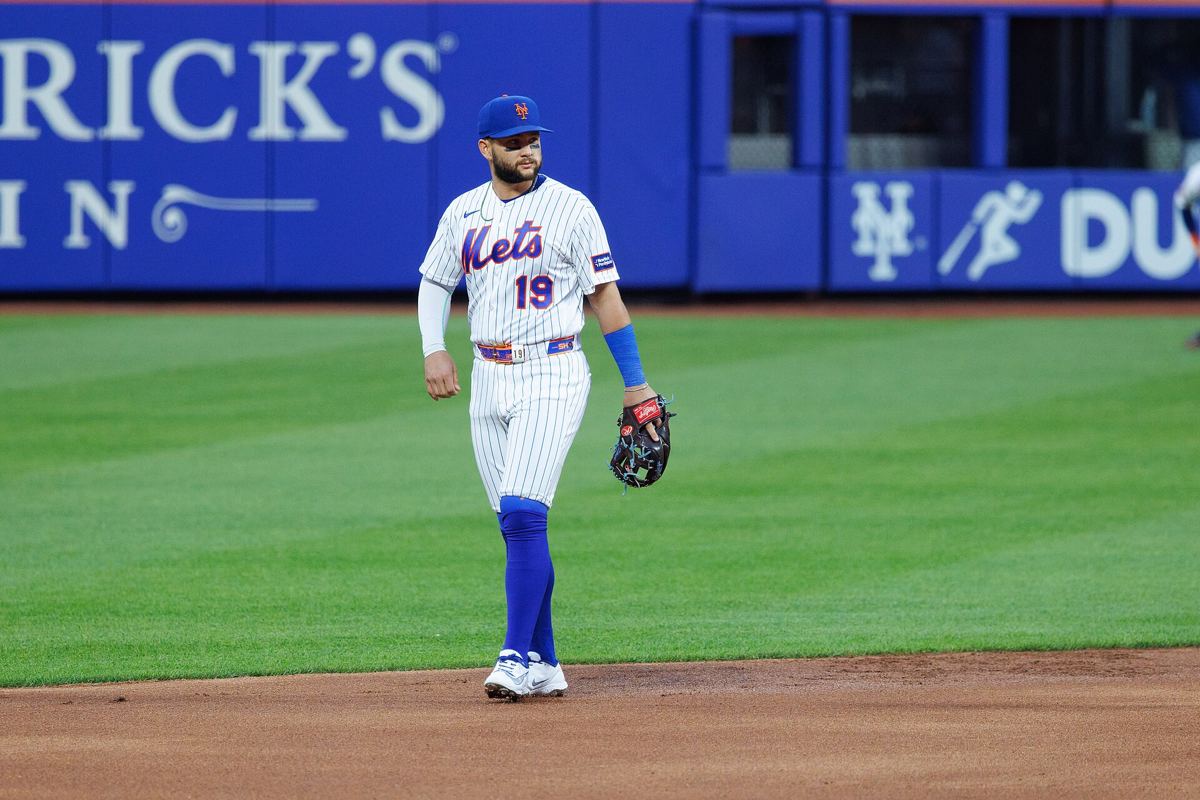
Bo Bichette had a choice this week between $42 million guaranteed and the open market. He took the money. The Athletic's Will Sammon reported that Bichette will exercise his player option, and the decision reads as a statement about what a free-agent infielder with his 2026 résumé is worth to the other 29 teams.
The deal he walked away from
The original contract is three years and $126 million, and the option year pays the same $42 million average. Opting out would have cost him that salary in exchange for a $5 million buyout, which MLB Trade Rumors says would be deferred for a decade. To come out ahead, Bichette had to land more than the $84 million left on the deal across multiple years. MLB.com argued he could not have matched the annual value after an uneven season, and MLB Trade Rumors called the two-year guarantee difficult to pass up.
The New York Post pointed to a weak market, with Bruce Chisholm-level names such as Jazz Chisholm, Luis Arráez and Nick Lowe among the best second and third basemen available. The Post also said Bichette might have topped the $84 million, so the call was not a sure thing. That is the useful tension. A thin class should help a hitter. It did not help enough to make him leave.
What the season said
Bichette hit .260/.312/.390 with 18 home runs. His wins above replacement came out at 0.7 on Baseball-Reference and 1.9 on FanGraphs, and that gap is mostly defense. He played 113 games at third base and 47 at shortstop after the Mets moved him around, and Baseball-Reference docks him for his glove across all positions. FanGraphs sees an average-plus bat in a below-average year. Baseball-Reference sees a player the market would have priced as a bat-first infielder with a questionable position.
The second half helped his case. MLB.com cites a .285/.337/.442 line after his slow start, and he appeared happier as the season went on. A team that bought that version would have paid for a rebound. A team that bought the full-year line would have paid for something much smaller than $42 million.
The test now
This is where the Mets get a pricey experiment. Bichette can opt out again after next season on the same terms, so New York is paying a record-adjacent salary for a player who holds the leverage every winter. If he hits like the second-half version, he walks into a better market with a cleaner story. If he repeats 2026, he can stay at $42 million anyway.
That structure is the real answer to the angle. A long-term deal gives a team control and gives a player security. An option year with a repeatable opt-out gives the player both, and the Mets carry the risk. Bichette did not turn down money. He declined to sell his free-agent stock at a low price and kept the right to sell it again.
The labor deal is set to expire at the start of December, and RealTime Sports framed that uncertainty as a possible factor, though Bichette has not said so himself. Whatever his reasons, the outcome is a high-priced test: does one guaranteed year at a top-of-the-sport salary beat a long-term deal in a market that would not pay him like a star? For now, the answer is yes.
Spotted a mistake? Tell us and we will correct it with a note.
The morning email
Last night's scores and the 3 stories worth your time, before work. Free.



Comments (0)
No comments yet.